Describe
Explain what you want in plain English.
The next step after Vibe Coding Basics
Vibe coding has changed software development. You can now describe an app in plain English and tools such as Claude Code, Codex and Cursor can generate much of the code for you.
That means you no longer need years of programming experience before you can start turning ideas into working products. But getting AI to write code is only the beginning.
If you want to build apps that real people can safely use, you still need to understand the foundations behind good software: architecture, databases, authentication, security, deployment, version control, design and how the pieces of a product fit together.
Coding has become easier. Building good software still requires engineering.
01 — The basics
Vibe coding is a way of building software by describing what you want in natural language and letting an AI coding agent handle much of the implementation.
Instead of manually writing every function, screen and configuration file, you can say things such as:
Build a task management mobile app with a light background, blue and orange accents, a list of tasks and the ability to mark tasks as complete.
An AI coding agent can then create the project, generate the interface, install libraries, write application logic and help you iterate on the result. You stay focused on what the product should do, while AI handles much of how the code gets written.
Explain what you want in plain English.
Let the AI create the initial implementation.
Ask for changes, test the result and keep improving it.
This is why someone with no traditional coding background can now build software that would previously have required a developer. The barrier to starting has fallen dramatically.
02 — What changed
For decades, the first major barrier to software development was learning how to code — syntax, frameworks, APIs, tooling, debugging and thousands of implementation details before you could make anything useful. AI coding agents have compressed much of that work.
You can now ask an AI to:
This does not mean AI is perfect. It means manually producing code is no longer the biggest barrier for someone who wants to build software.
The valuable skill is shifting from “Can you write the code?” to “Do you understand what should be built, how the system should work, and whether the result is safe and reliable?”
03 — The gap
A working screen on a simulator can feel like a finished app. It isn't. Once real users start interacting with your product, you have to make decisions that go far beyond generating UI and features.
Where does your data live? How is it structured? What happens when hundreds or thousands of people begin using the app?
How do users create accounts and sign in securely? What happens when they forget a password or sign in from another device?
Who is allowed to read or modify each piece of data? Could one incorrectly configured rule expose every user's information?
Your AI, payment and backend services use private credentials. These must never accidentally be shipped inside your app or committed publicly.
What happens when AI makes a change that breaks something that worked yesterday? Git gives you history, branches and a way back.
Running locally is not the same as shipping. Real products need hosting, production environments, releases and repeatable deployment processes.
An app can technically work and still feel untrustworthy or confusing. Good product design affects whether users understand and continue using it.
Images, documents, videos and user uploads need appropriate storage, permissions, limits and cost management.
AI can help you with every one of these areas. The difference is that you need enough understanding to direct the AI, recognise bad decisions and know what questions to ask. That is the next level after basic vibe coding.
04 — The new skill
The goal is not to spend the next three years memorising programming languages. You need enough software engineering knowledge to operate effectively with AI.
Think of AI as an extremely fast junior engineering team. It can produce a huge amount of work, but somebody still needs to provide direction, make product decisions, check architecture, recognise security problems and decide when the output is good enough to ship.
You learn software engineering by building software, with AI doing the heavy lifting.
The difference in practice
“Make me a login screen.”
“Implement email authentication with secure session handling, protected routes, clear error states and appropriate database access rules.”
The point is not that the second person manually writes the code. They understand enough to tell the AI what a production-quality outcome requires.
05 — From project to product
The path from a course project to something real users depend on, one stage at a time.
You decide what problem the app should solve.
You turn the idea into a structured description of the product, users, screens and features.
Claude Code or another coding agent turns the PRD into an initial application.
You run the app in iOS Simulator or Android Emulator and make iterative changes.
You introduce accounts, data storage, APIs, file uploads or other services.
You make sure user data, credentials and permissions are correctly protected.
You improve usability, consistency and visual quality.
You move from “it works on my computer” to something real users can access.
You put it in front of users and learn what actually needs to change.
You continue improving the product based on real usage.
06 — Roadmap
A practical roadmap after Vibe Coding Basics. You don't need all of it at once — learn each level as your product needs it.
07 — A warning
AI coding tools are extremely capable, but they can also confidently make poor architectural decisions, introduce security problems, use outdated approaches or break existing features while implementing something new.
The answer is not to stop vibe coding. The answer is to become a better operator of the AI. When you understand the fundamentals, you can ask better questions:
The person who knows to ask these questions gets dramatically better results from the same AI tool.
08 — Audience
You have an idea and want to build or validate it without spending £10,000+ before you know whether users want it.
You want to experiment with multiple software ideas without hiring a developer for every iteration.
You see opportunities to build tools, apps or automations around your work and want to create them yourself.
You already understand engineering but want to become dramatically faster by adopting AI-first development workflows.
09 — Work with me
The course gives you the foundations for building your first AI-assisted app. If you now have an idea you want to take further, I can work with you directly.
I've spent more than 15 years building software products and have shipped more than 50 apps across mobile and web. I work with founders and aspiring builders who want to use AI to become capable of building their own products rather than remaining permanently dependent on developers.
Learn by building your own product with direct guidance. We work through the engineering decisions that sit beyond prompting: backend, authentication, databases, security, deployment, product architecture and design.
Already building something with Claude Code, Codex or Cursor? I can help you review what you have, identify technical risks, decide what to build next and get unstuck.
If the project has moved beyond what you want to build yourself, we can discuss working together to design and build the product.
No polished brief required. Tell me what you're trying to build, where you're currently stuck and what kind of help you're looking for.
Tell Me What You're Building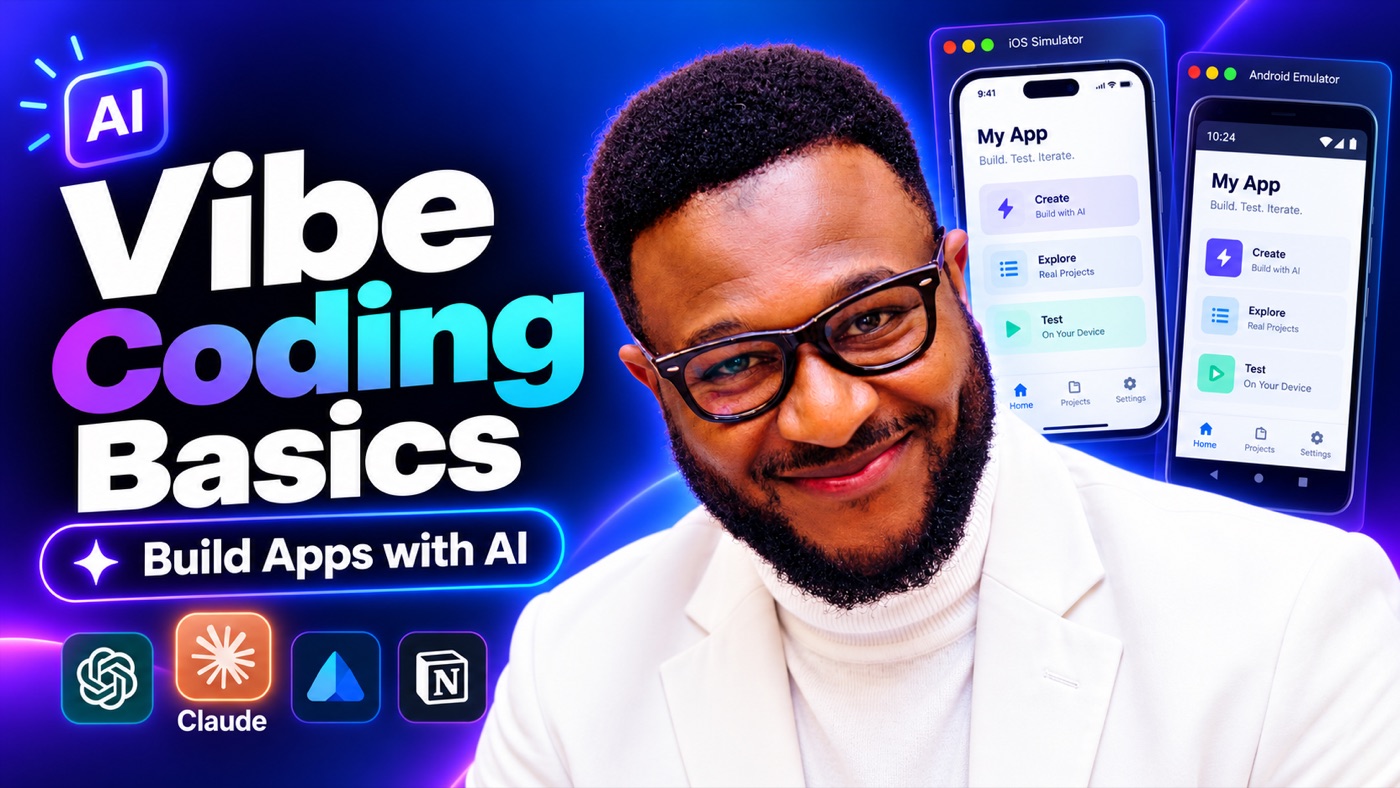
10 — About Dee
I'm Dee, a product engineer and startup CTO who has spent more than 15 years building software. I've worked across the full journey from an idea on paper to a product being used by real customers: product thinking, interface design, mobile development, backend systems, deployment and iteration.
I've shipped more than 50 apps and spent years helping founders turn ideas into products. AI has changed the implementation side of software development more dramatically than anything I have seen in my career. That's why I teach vibe coding.
I believe far more people should be able to build their own software. But I also believe there's an important difference between generating code and engineering a product you can confidently put in front of real users. My goal is to help people bridge that gap.
11 — Contact
Keep it short. A few sentences is plenty to get started.
No polished brief required. Tell me what you're trying to build, where you're currently stuck and what kind of help you're looking for.
Email Me Your Projector write to mrdeeodus@gmail.com
12 — FAQ
Not in the traditional sense before you start building. AI can now handle much of the syntax and implementation work. However, as your apps become more serious, understanding software engineering concepts will make you dramatically better at directing AI and evaluating what it produces.
It can build surprisingly large parts of an application, including interfaces, features, backend integrations and deployment configuration. The more complex and important the product becomes, however, the more valuable human judgement becomes around architecture, security, product decisions and testing.
Yes. You can start without programming experience. The important thing is to build progressively rather than trying to understand the entire software industry before creating your first app.
The course primarily demonstrates Claude Code, but the overall principles apply to other AI coding agents such as Codex and Cursor. The tools will continue changing. The skill that matters is learning how to work effectively with AI to build software.
It depends on the product and where you are in the journey. For early validation, learning to build with AI can dramatically reduce the cost and time required to test an idea. For complex, high-risk or mature products, experienced engineers may still be valuable. The advantage of understanding the process yourself is that you become a much better founder, client and product owner when you do hire someone.
Start with version control, backend fundamentals, authentication, databases, API security, deployment and product design. Most importantly, continue building.
Yes. Use the contact form and explain what you're building, how far you have got and where you need help.
The fastest way to become good at AI-assisted development is not to consume endless tutorials. It's to build increasingly ambitious products and learn the engineering principles as you need them.
If you're working on something and want experienced guidance, tell me what you're building.
Work With MeOr continue experimenting with your course project and come back when you hit the next problem worth solving.